Branding Start here
What is branding? A plain guide
Most people think a brand is a logo. It is much bigger than that, and once you can see its parts, you can shape yours on purpose.
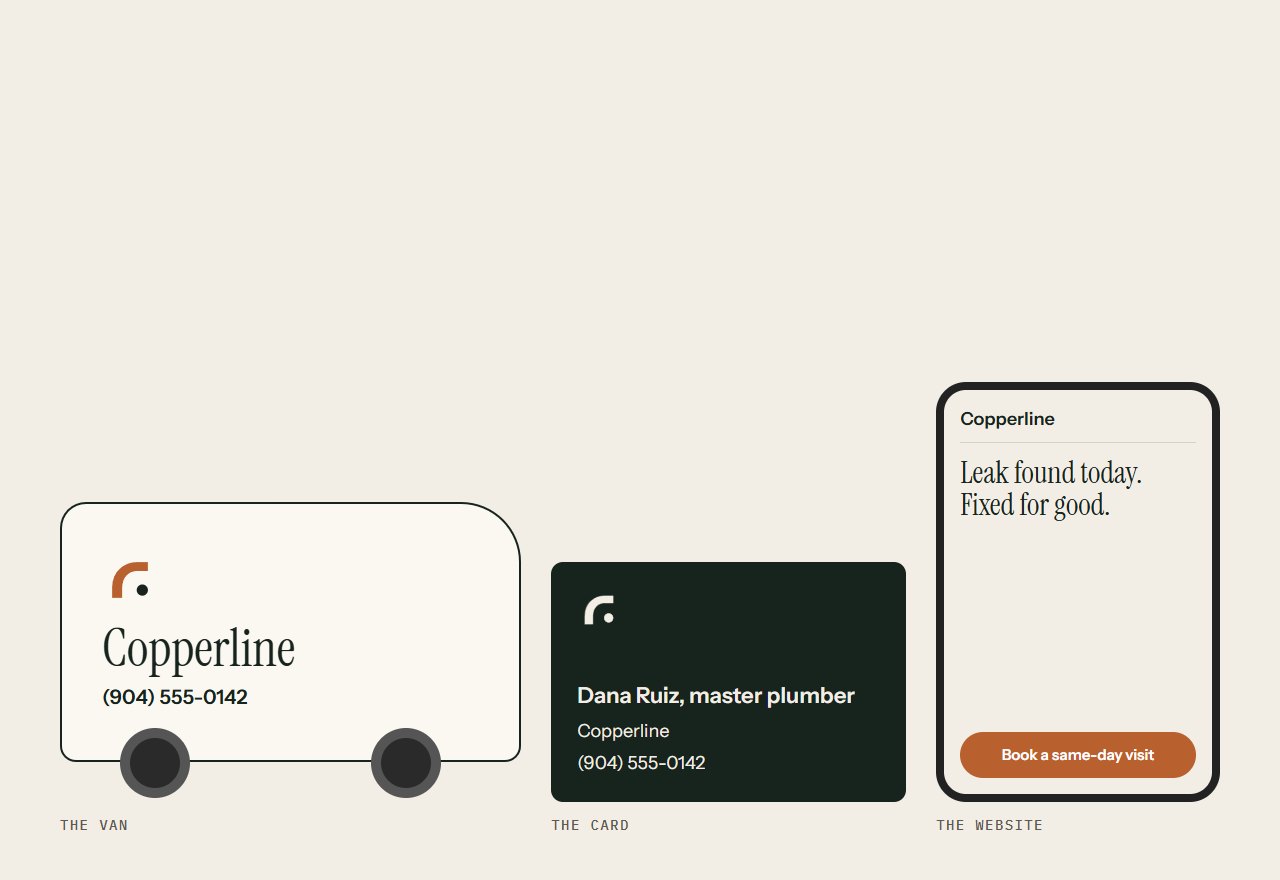
i · two vans pull up outside a house
A brand is what people think of you
Picture two plumbers parking outside your house. One van is clean, with a name and colours you remember from a neighbour's recommendation. The other has a phone number taped inside the windscreen.
You already feel differently about them, and neither has touched a pipe yet. That feeling is the brand, and the simplest way to remember it is this: your brand is the reputation you earn on purpose, and your logo is just its signature.
The American Marketing Association (AMA), a professional body for marketers, defines branding as the process of building a distinctive identity for a business. It treats a brand as bigger than any logo or tagline. A brand is how people see and feel about the whole business.
Experts differ a little on where a brand lives. Brandingmag says it exists in people's minds as familiarity, meaning, fondness and reassurance. The University of York takes a more practical view: branding is how a company presents itself, in visuals and in words.
Both views help. You control what you show, and your customers decide what it means.
All through this guide we follow Copperline, a made-up plumbing company, as it builds its brand from the ground up.
Copperline puts a brand-new logo on its van. What has changed?
ii · three words that get mixed up
Brand, logo and identity are three different things
People often use the words brand and logo as if they meant the same thing. Penn State Extension, a university advice service for businesses, points out that they are different ideas.
Here is how they fit together. A logo is a visual symbol for a company, product or service. Visual identity covers the logo plus the colour palette, typography and imagery.
The brand sits above both. It stands for the promise you make to customers and what they expect about quality and value.
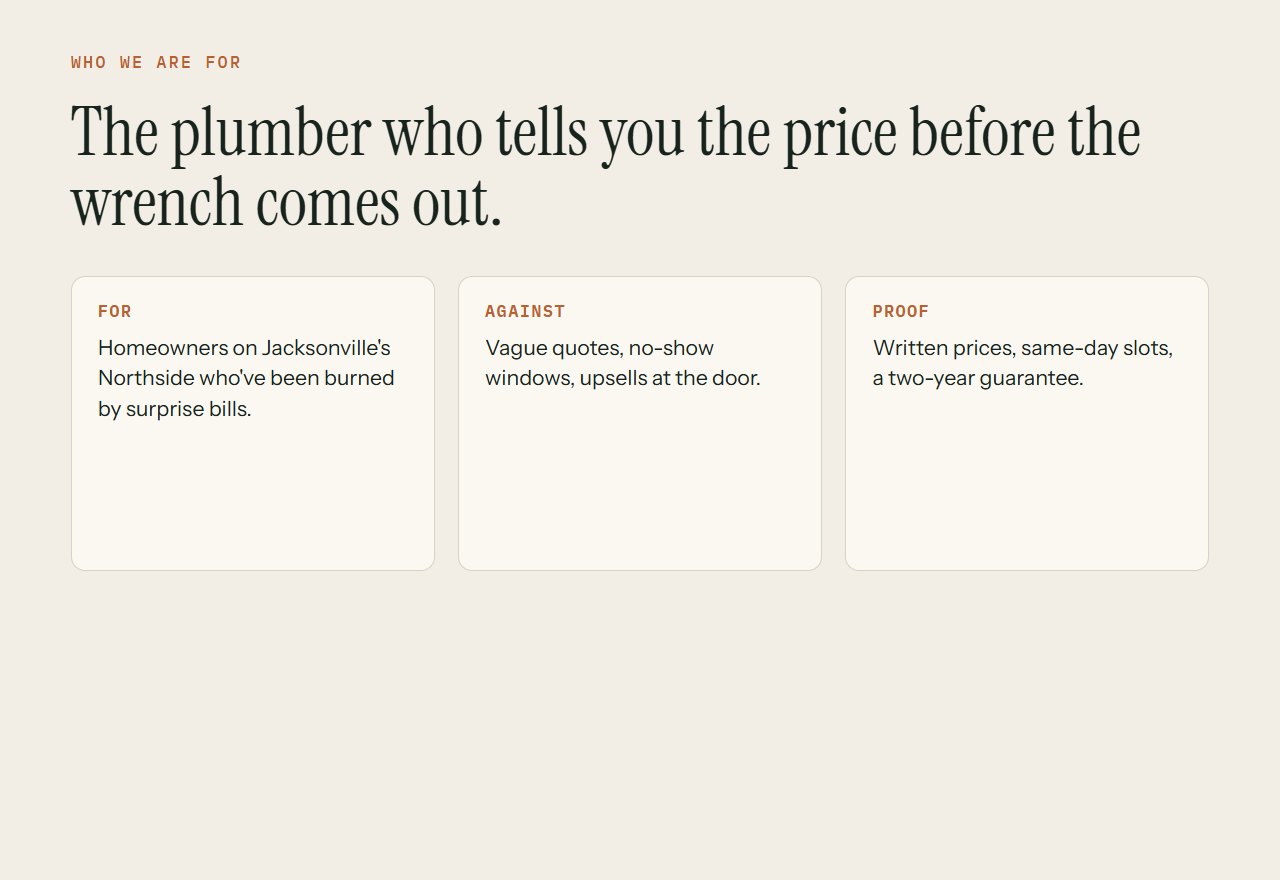
On Copperline's website, the logo is one small mark in the corner. The identity is every visual choice on the page. The brand is what a visitor believes about Copperline after reading it.
This is why a new logo rarely fixes a weak brand. If customers feel let down by slow replies or surprise bills, a fresh symbol on the van will not change that feeling.
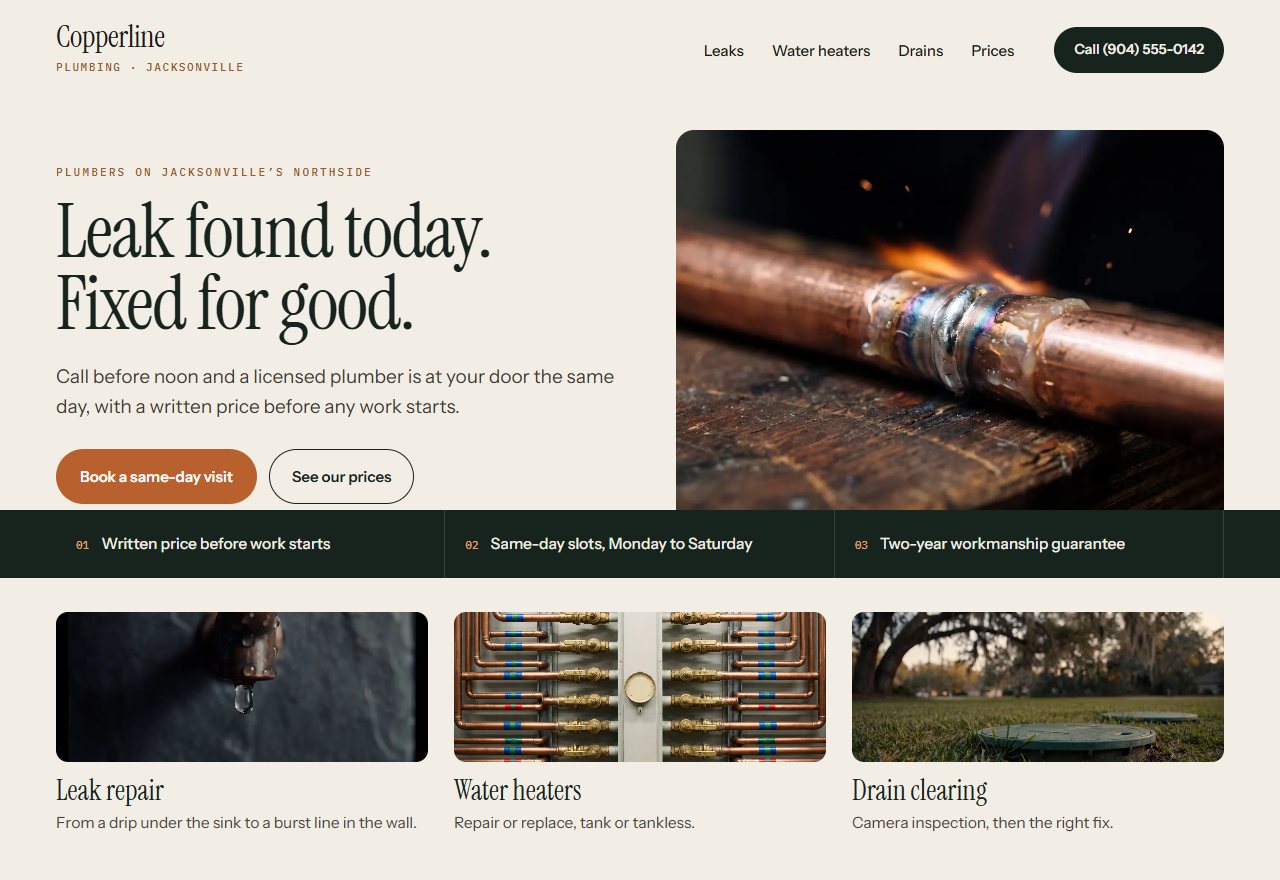
- 1 · Logo
The symbol that stands for Copperline. It is one part of the whole, not the whole.
- 2 · Typography
The chosen typeface is part of the visual identity, not decoration.
- 3 · Imagery
Photos count too. Penn State lists imagery as part of visual identity.
- 4 · Voice
Even the button's wording is branding, because a company presents itself in words as well as visuals.
- 5 · Brand promise
Proof of good work backs up what customers expect about quality and value.
iii · building it in the right order
What a brand is made of, from the bottom up
Built In, a business and technology publication, calls branding the art of standing apart from others. It draws on voice, look and feel, messaging and positioning, not on any one element.
Order matters. The AMA says a brand's mission and values come before its visuals and sit at the base of its identity. So the first layer is strategy, and the logo comes later.
For Copperline, the strategy might be one line: honest plumbing for older homes, with a fixed price agreed before any work starts. Every other layer is built to say that promise out loud.
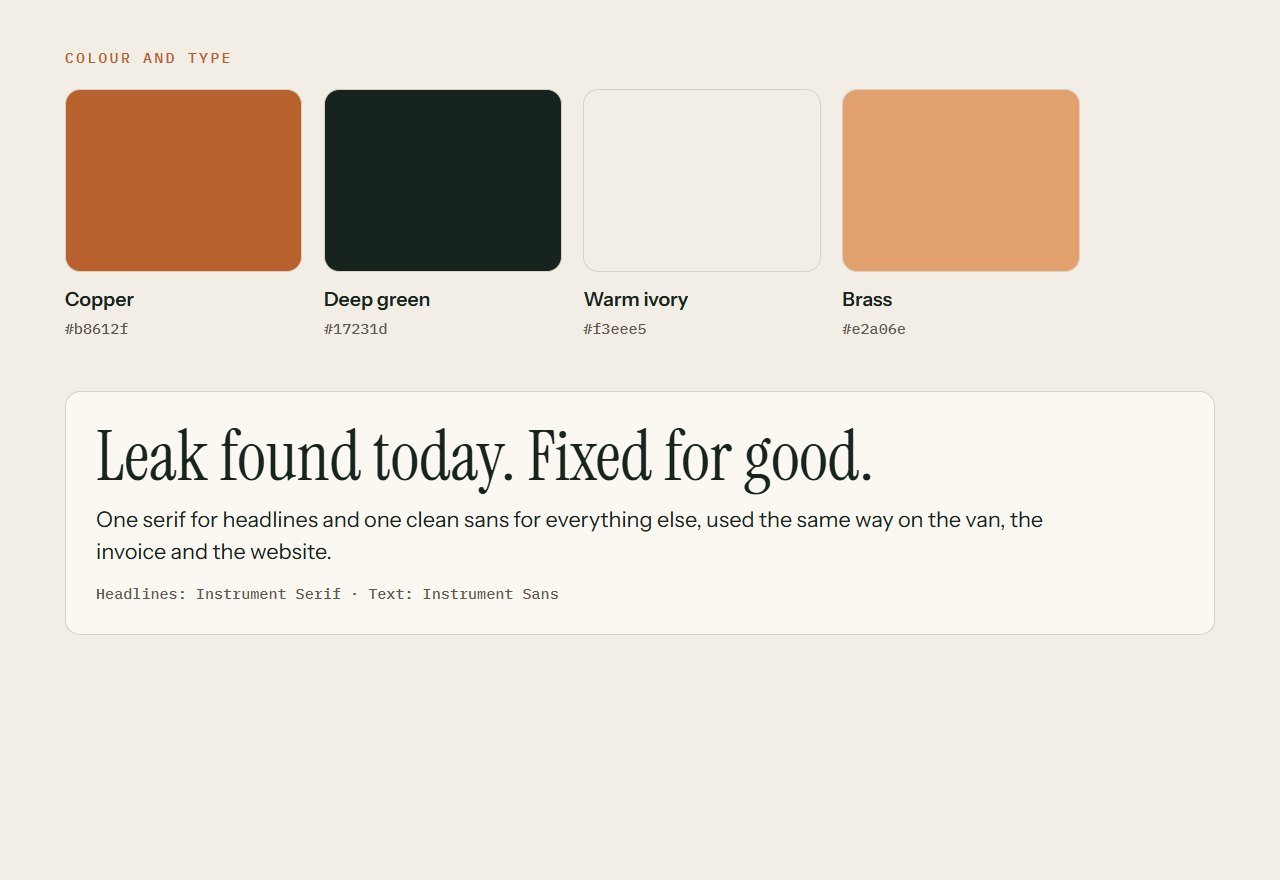
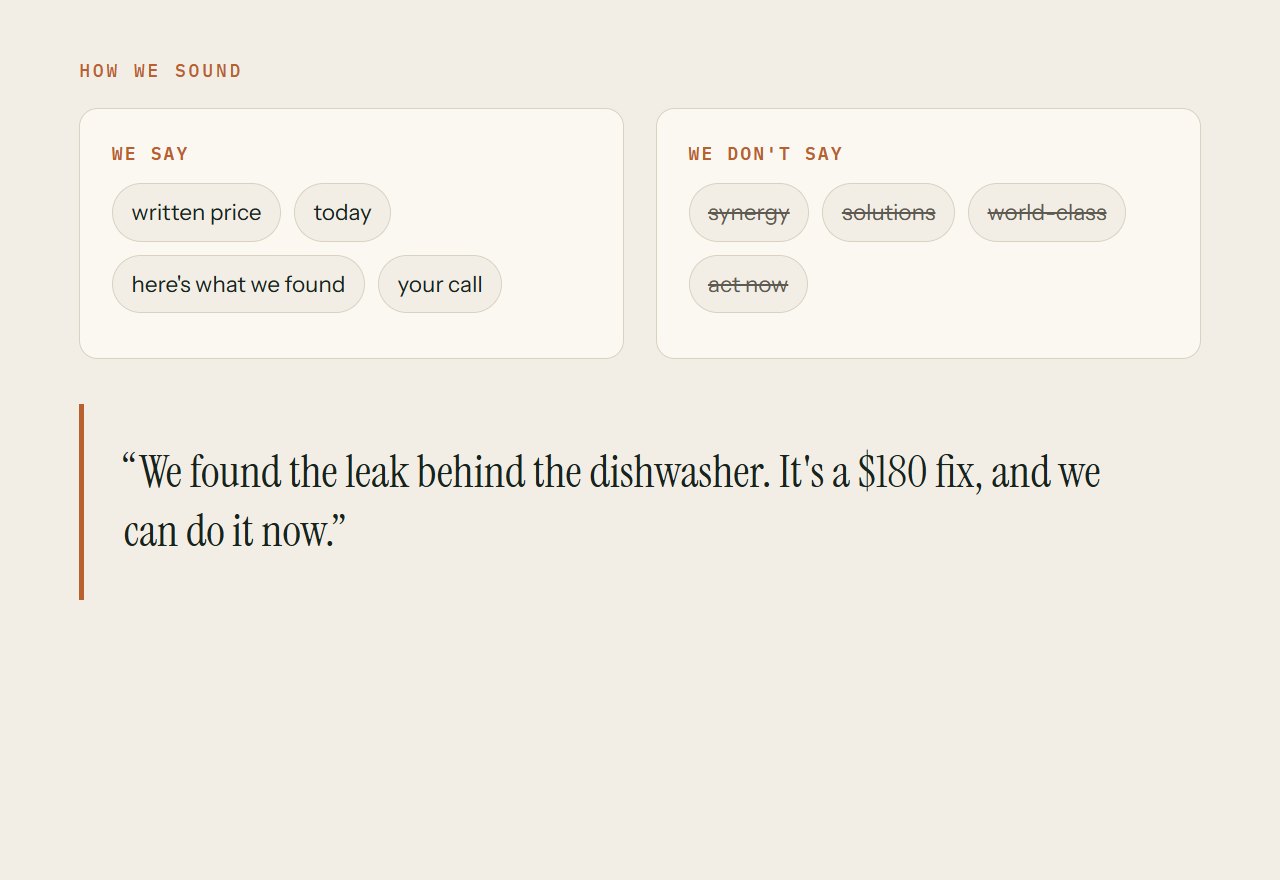
Next come the name and logo, which anchor the brand visually. Then colour and type, chosen to suit the promise. Then voice, which is how you sound in writing and on the phone, because branding happens in words as much as in pictures.
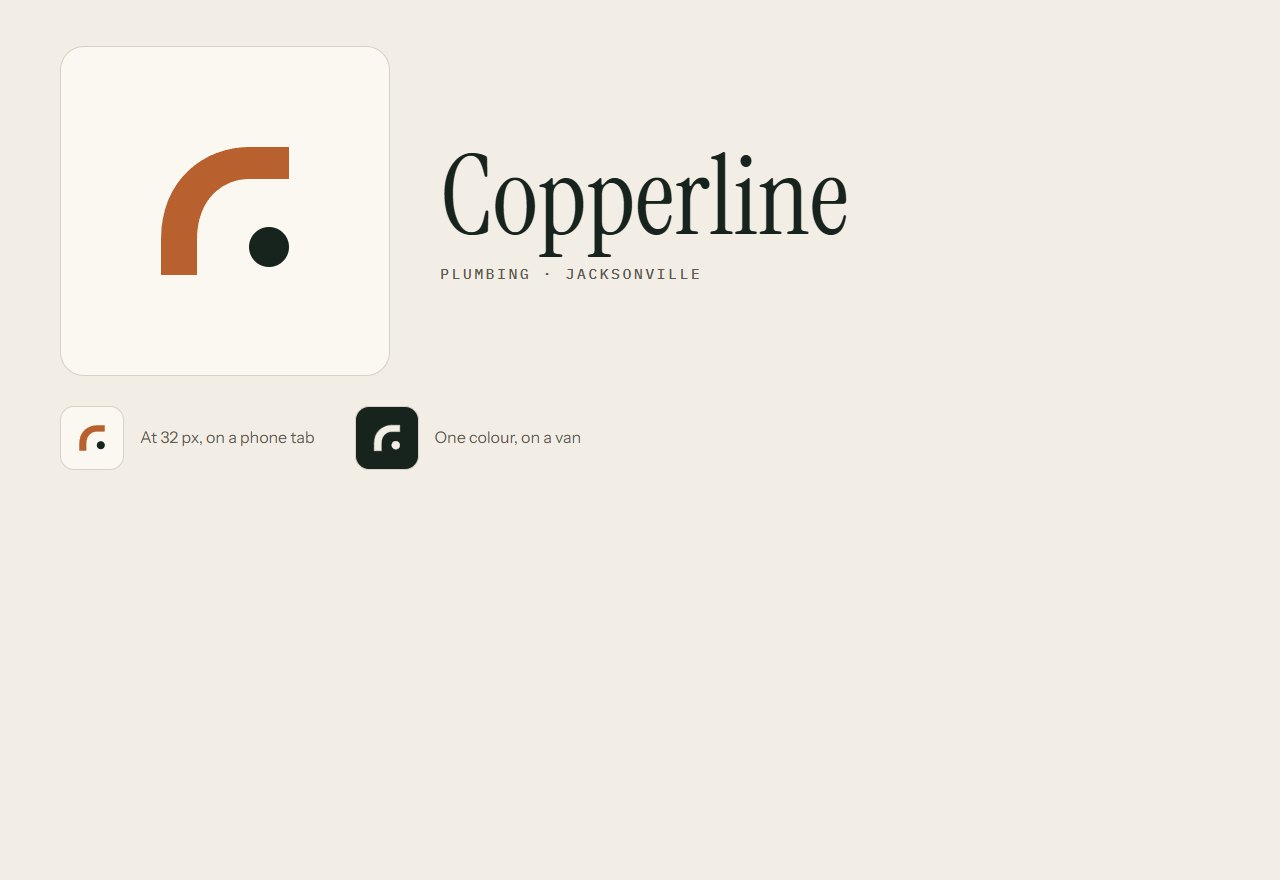
A good logo also has to cope with real life. Copperline's mark needs to read when it is tiny on a phone screen and when it is printed in one colour on a receipt.
The last layer is use: putting all of it to work on the van, the card and the website. Marq, a company that sells brand-management software, puts its view bluntly: “A brand is not a logo. A brand is not a name.” Those are the pieces, and the brand is what they add up to.
Write the promise
One line on who Copperline serves and what it promises. Mission and values come before any visuals.
Give the promise a face
A copper pipe-bend mark and a serif wordmark that work at full size, at tab size and in one colour.
Choose how it looks
Copper, deep green and warm ivory, with chosen typefaces. Together they make up the visual identity.
Decide how it sounds
A short list of plain words Copperline uses and jargon it avoids, so every message sounds like the same company.
Show up the same way everywhere
The van, the business card and the phone website all match, which builds trust and recognition.
iv · the van, the card and the phone
Consistency is what turns a look into trust
A brand only works if people meet the same thing every time. The AMA says presenting the brand the same way on every platform and in every interaction builds trust and recognition.
Penn State makes the same point about visuals. Keeping the logo, colours, type and imagery consistent strengthens recognition and creates one clear brand image. York adds that a cohesive identity makes the whole experience feel smooth and joined-up for customers.
The cost of skipping this is easy to miss. York warns that without consistent branding, new products or services can easily be overlooked. If Copperline launched drain cleaning under a different look, people might not realise it came from the plumber they already trust.
The practical fix is a brand guideline. Marq recommends one so that everyone presents the brand the same way. It matters most once other people, such as staff, printers or a web designer, start making things for you.
Being consistent does not mean being dull. Copperline can run a cheeky advert and send a formal quote and still sound like itself, as long as its colours, type and voice stay the same.
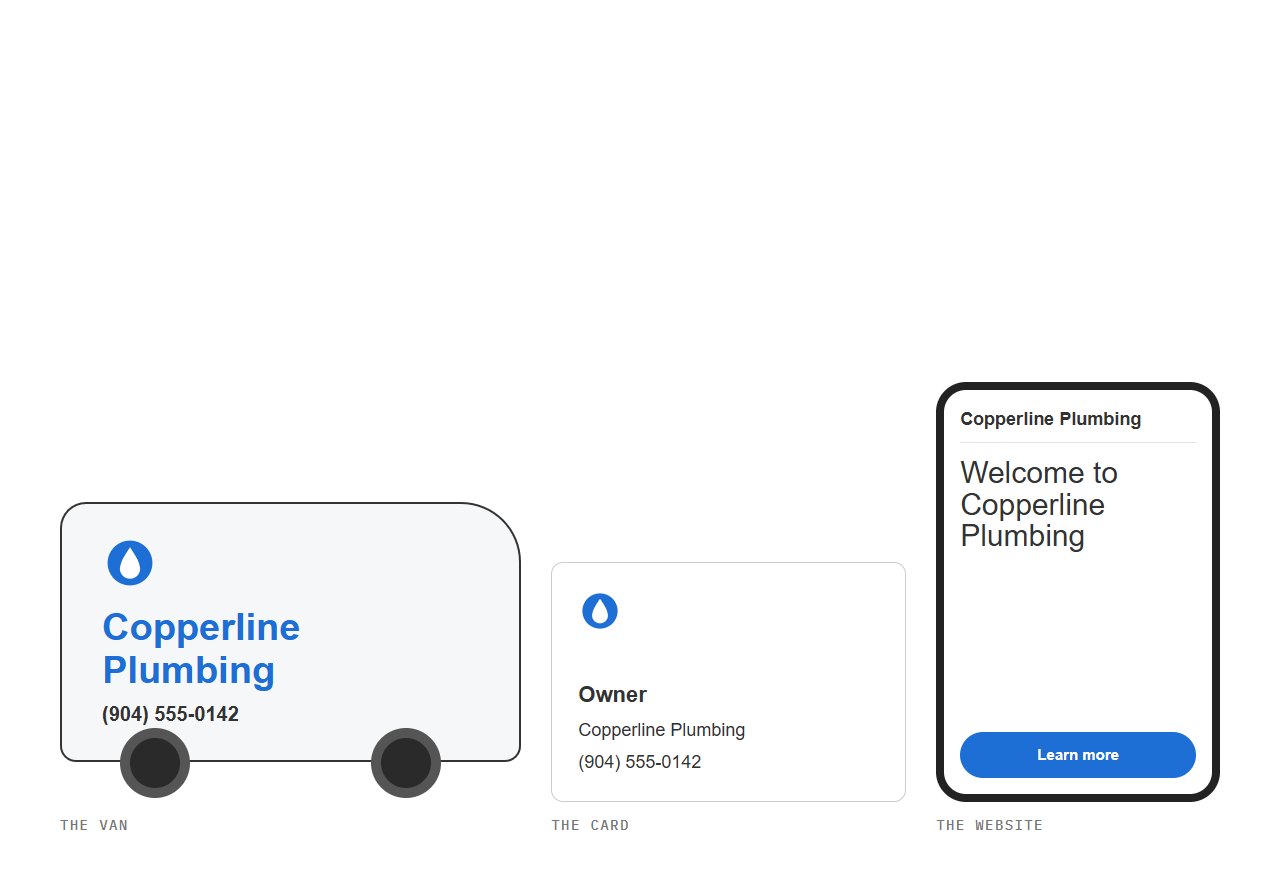
v · a homeowner choosing between two plumbers
Why a clear brand makes you easier to choose and trust
Here is what is at stake for your business. Built In warns that a business without a distinct brand gets lost among competitors fighting for attention. With one, a brand strategy spreads name recognition and makes the business look credible.
For a plumber, that could mean being the name a homeowner already knows when a pipe bursts at night, not one of ten strangers in a search.
Over time the effect grows. The AMA says branding turns a business from a simple provider into one customers trust. That trust is what makes a customer call you again instead of starting their search from scratch.
A brand also builds value of its own. York calls this brand equity: as people think better of a brand's products, the brand itself becomes worth more.
Be wary of big promises. Some marketing writing claims that branding guarantees sales, but that is opinion, and the research does not show it. You will also see neat figures for how much consistency adds to revenue, but estimates vary and none had a verifiable original source, so this guide quotes none.
What the evidence does support is slower and steadier. The AMA describes branding as long-term work that shapes how customers see a business.
Easier to pick out
A homeowner looking for a plumber recognises Copperline's name and colours from a van they passed last week. A familiar name feels like a safer bet than a stranger.
credible
Built In: a brand strategy makes a business look credible
A promise kept
Copperline promised a fixed price before work started, then stuck to it. Built In describes branding in just these terms: promising a particular experience, then delivering it.
trust
AMA: branding turns a simple provider into one customers trust
Customers who send friends
The customer calls Copperline again and recommends it to a neighbour. Penn State says good branding creates positive feelings that lead to loyalty and advocacy.
loyalty and advocacy
Penn State: what positive brand feelings lead to
Value you own
If Copperline were ever sold, its name and reputation would count for something. Brandingmag treats a brand as a business asset with its own monetary value.
monetary value
Brandingmag: a brand is a business asset in its own right
vi · a notebook on the kitchen table
Your first steps toward a clearer brand
You can start this week with a pen and an hour, and you will not need a designer for the first steps. When you are ready for the visual side, our page on how a brand identity is designed explains what that work involves.
0 of 6 done
vii · Questions people ask
Quick answers
Do I need a new logo to build a brand?
Usually not at first. The logo anchors a brand visually, but it is only one part of it. Getting your promise right and using your look consistently often does more than a redesign.
Is branding only for big companies?
No. York advises new companies to decide early how they want to be seen, because a strong brand creates loyal customers. A small business with a clear promise and a consistent look is already doing branding.
Can my brand end up different from what I intended?
Yes. You control what you show, but the brand is what customers conclude from it. Brandingmag says a brand exists in people's minds, so pay attention to what customers actually say about you.
viii · Where this comes from
References
- What Is Branding? A Complete Guide for Marketers in 2025American Marketing Association
- The importance of brandingUniversity of York
- Unveiling the Divide: Brand vs. LogoPenn State Extension
- What Is Branding and Why Is It Important for Your Business?Brandingmag
- What Is Branding?Built In
- What is branding, and why is branding important?Marq (formerly Lucidpress)
We read these sources and explained them in our own words. The plumbing company in the pictures is made up, to show the ideas. This is general information, not legal, tax or financial advice.
 Full frame
Start here
Your business, full frame
A short call, a written plan and a fixed quote before any work starts. Or begin with the free audit and see what we’d change first.