SEO: Being Easy to Find
SEO is how your business shows up when someone searches for what you sell. Here is what changes when you are easy to find, how long it takes, and what to do first.
i · a phone, a leak, a search box
Customers search before they call
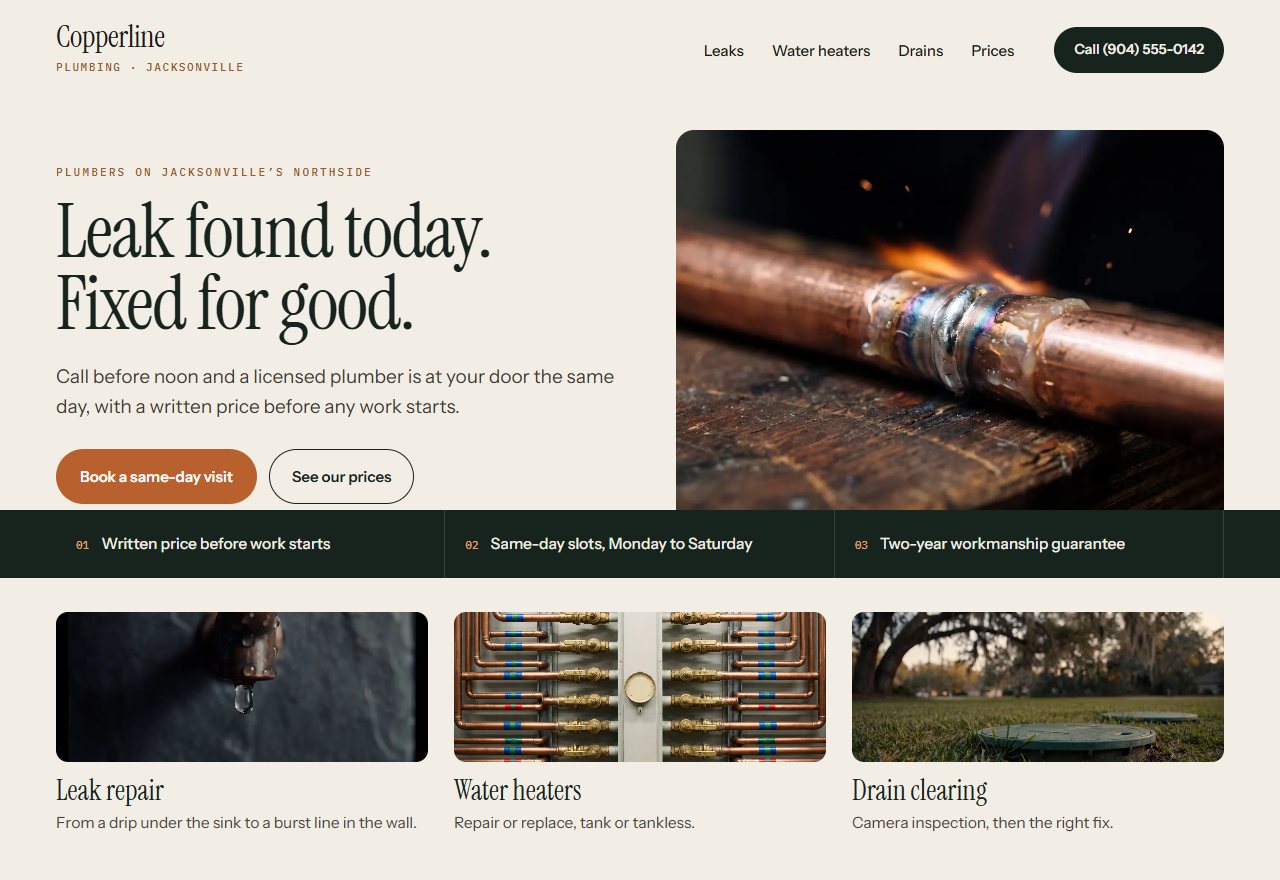
One morning a pipe bursts under a kitchen sink. The owner grabs a phone and types 'plumber near me'. The few businesses on that screen get a chance at the job, and the rest never get a look.
In one line: SEO is how you make sure a customer who is already searching for you can actually find you. SEO is not a trick. It is the habit of being clear and easy to find where people already look.
Search is a big place to be found. Organic search, meaning the unpaid results, was the biggest traffic channel in 2025, with more than a trillion visits.
Our running example is Copperline, a made-up plumbing company. The more of the relevant searches Copperline appears in, the more traffic, leads and revenue it can expect.
Here is what that can look like. One agency case study saw its monthly organic visits climb from roughly 4.1K to 12.4K across 2025 and 2026. The same study saw keyword visibility more than double.
That is one case, not a promise. It does show the shape of the upside.
- Before4.1K
- After12.4K
ii · a results page at a glance
What a searcher actually sees
Picture a results page as a street of shopfronts. Customers walk past quickly and step into the one that looks right.
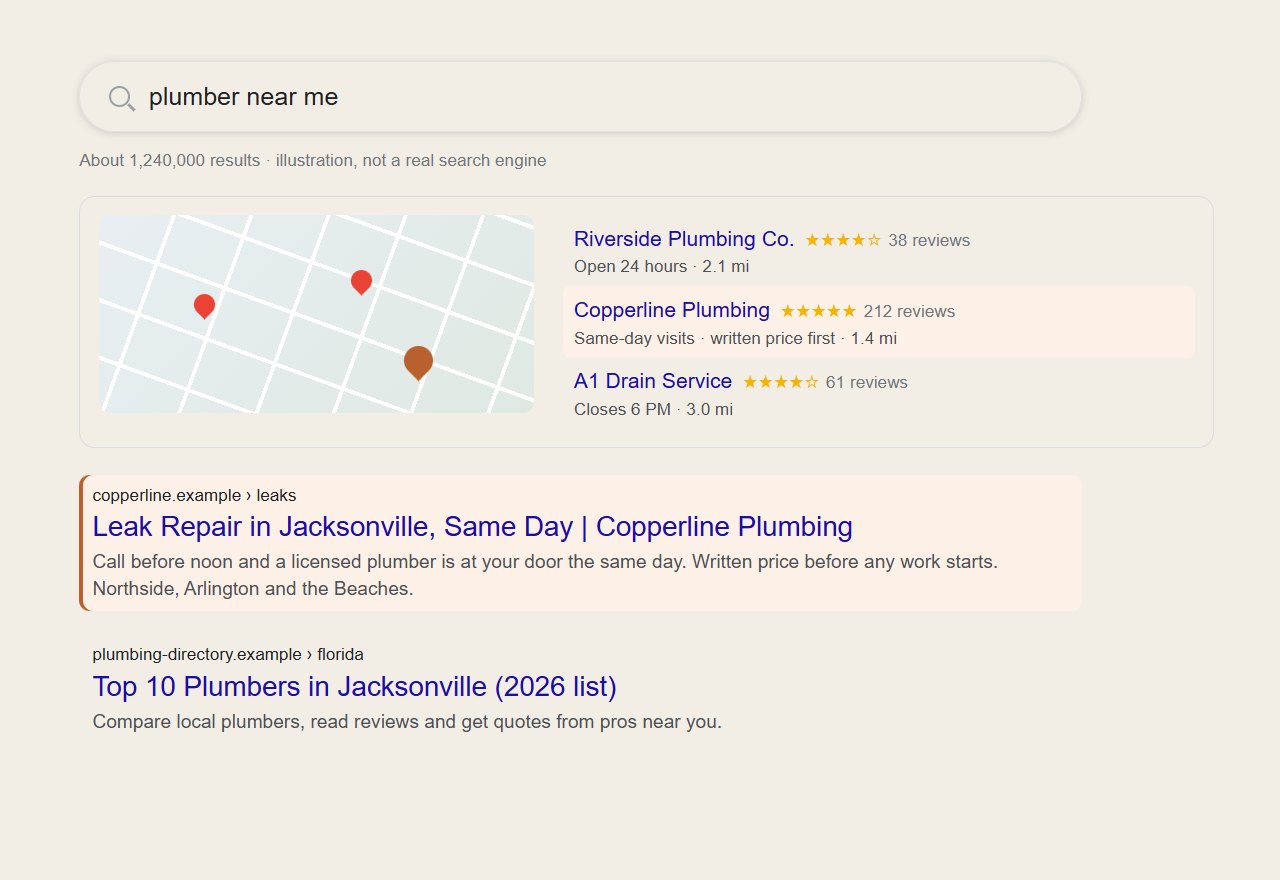
Each listing shows a title and a short description. Copperline's says what it fixes and where it works. A weaker listing says 'Home' and a generic welcome, which gives a stranger no reason to click.
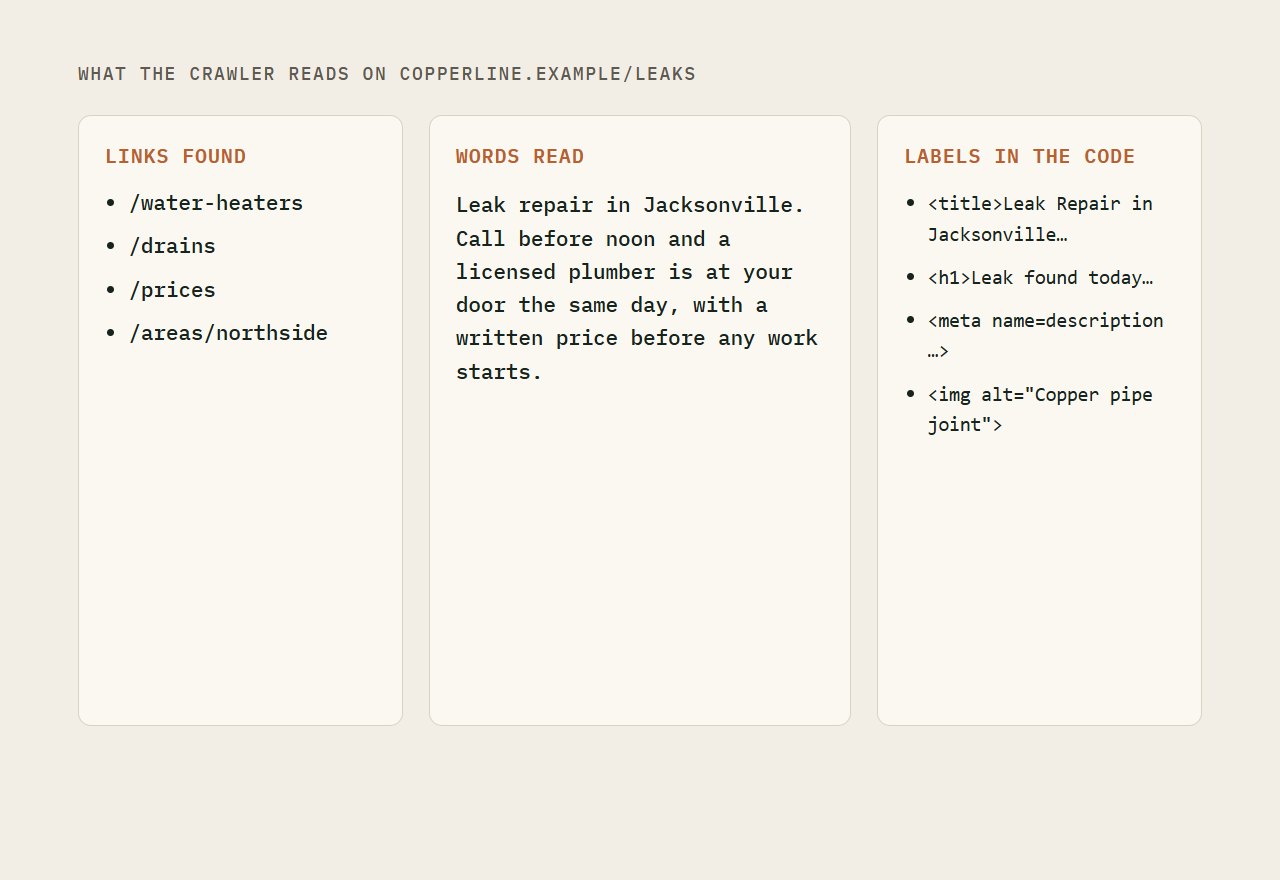
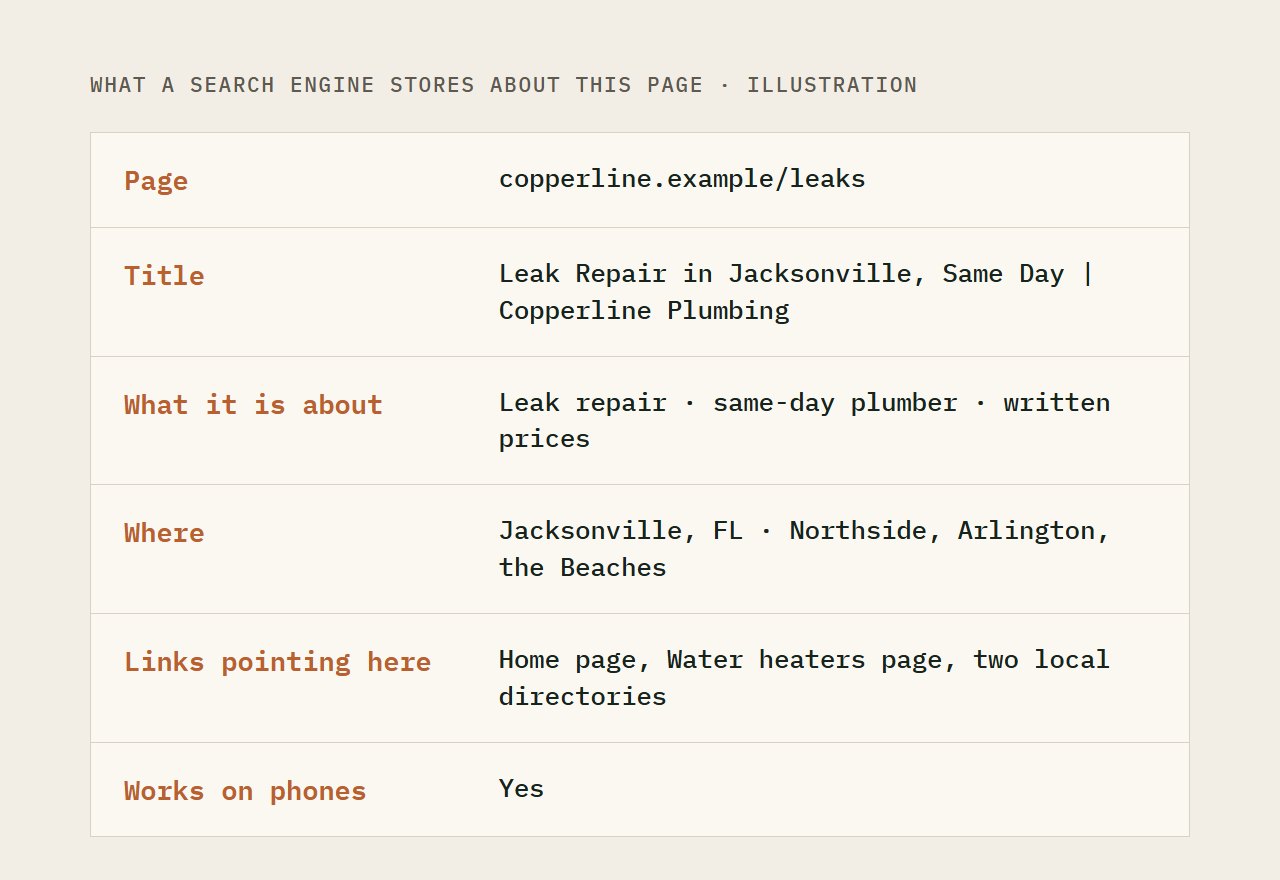
The stack at the top of this page shows our simple picture of the journey. A page is read, stored and then shown. Clear words at the start can carry through to the end. This is an illustration, not a measured result.
There is a long-term payoff too. A page that ranks well keeps earning visibility for a long time without ad spend. Organic visitors also do not cost a per-click fee the way paid ads do.
Ahrefs, a search tools company, estimates its own organic traffic would cost millions a month to buy through paid ads. Few firms are that large, but the lesson holds. A good ranking is worth real money.
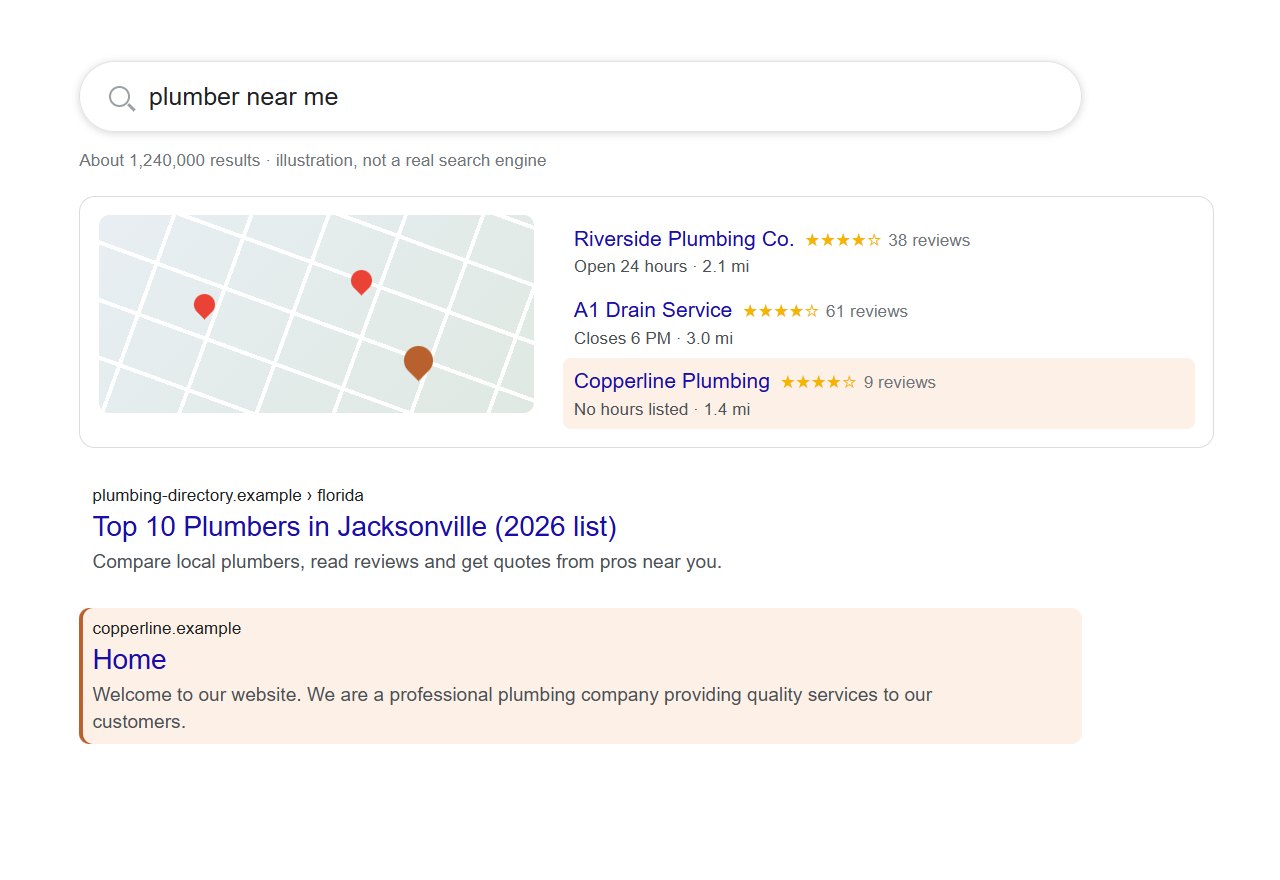
iii · a map pin on the street
Local results, the map and reviews
Most owners care about customers nearby. Local SEO exists for that. It makes a business appear in searches tied to a place, not only in general results.
Your main tool is the Google Business Profile. It can put a business on Google Maps when people search for it or related terms. HubSpot recommends optimising it for local visibility.
Search Engine Journal suggests starting with that profile, plus the brand's Knowledge Graph panel and its social profiles.
Running the profile means posting updates and replying to customer reviews. Reviews on Google and on sites such as Yelp deserve a strong emphasis.
Keep Copperline's name, address and phone number the same everywhere. HubSpot advises submitting consistent details to local directories, but warns that low-quality directories can hurt instead of help.
- 1 · The search
A customer types a need with a place in mind, such as 'plumber near me'.
- 2 · The map
A Business Profile can put you here when people search for you or related terms.
- 3 · Your listing
A clear title and description tell a stranger what you do and where.
- 4 · Your neighbours
Other firms compete for the same spot. Replying to reviews is one way to stand out.
iv · a seed, a season, a shoot
How long it takes
SEO is slow, and nobody can give you an exact date. Estimates vary, so treat any promised number with care.
In one survey, the most common answer from SEOs was three to six months. Search Engine Journal says SEO can make a noticeable difference within the first year of effort, though that is not guaranteed. These are different measures, so they do not clash.
Do not expect a straight line. Google's algorithm updates make traffic move up and down.
Copperline treats it like servicing a boiler. Small, regular visits beat one big panic.
Three to six months
In one survey of SEOs, this was the most common answer when asked how long results take. It is a survey answer, not a rule.
45.6%
The most common survey answer: three to six months.
A noticeable difference
Search Engine Journal says SEO can make a noticeable difference within the first year of effort. It adds that this is not guaranteed.
first year
A noticeable difference is possible, not guaranteed.
Expect bumps
Google's algorithm updates make traffic move. A dip does not always mean you did something wrong. Look at the longer trend.
up and down
Traffic is not steady.
v · a ledger and a locked drawer
The limits, and what it costs
SEO has limits. Ranking below the first page means very few searchers see your link.
Newer ways to search are also arriving. AI-driven traffic is growing quickly but is still small next to organic search.
Be careful with the word 'free'. Organic visitors carry no per-click fee, but the work still takes time or money. Search Engine Journal calls SEO fairly cheap next to other marketing and best treated as an investment.
HubSpot says small businesses can start without a big team or budget, since many steps are free. None of these sources puts a price on the work, so ask for specifics before you pay anyone.
SEO is also harder to measure than paid search. A simple sum can still help you judge what search enquiries are worth.
Monthly value of search customers
—The starting numbers are examples only. Replace them with your own. This is a rough sum, not a forecast, and SEO is harder to measure than paid search.vi · a clipboard on the van seat
Your next steps
You do not need to do everything at once. Start with the steps below, then check in after a few months. If you want help with the work, our SEO service covers the same ground.
0 of 6 done
vii · Questions people ask
Quick answers
Is SEO really free?
Not quite. Organic visitors carry no per-click fee, and many first steps cost nothing. The work still takes time, and Search Engine Journal calls it an investment.
Should I just pay for ads instead?
They do different jobs. A page that ranks well keeps earning visibility without ad spend. Ads are easier to measure, though. Many businesses think about both.
Will AI replace search?
AI-driven traffic is growing quickly but is still small next to organic search. Being clear and easy to find is sound advice either way.
viii · Where this comes from
References
- Importance of SEOSemrush
- Benefits of SEOAhrefs
- Why Is SEO Important? (SEO 101)Search Engine Journal
- What Is Small Business SEO?HubSpot
We read these sources and explained them in our own words. The plumbing company in the pictures is made up, to show the ideas. This is general information, not legal, tax or financial advice.
 Full frame
Start here
Your business, full frame
A short call, a written plan and a fixed quote before any work starts. Or begin with the free audit and see what we’d change first.