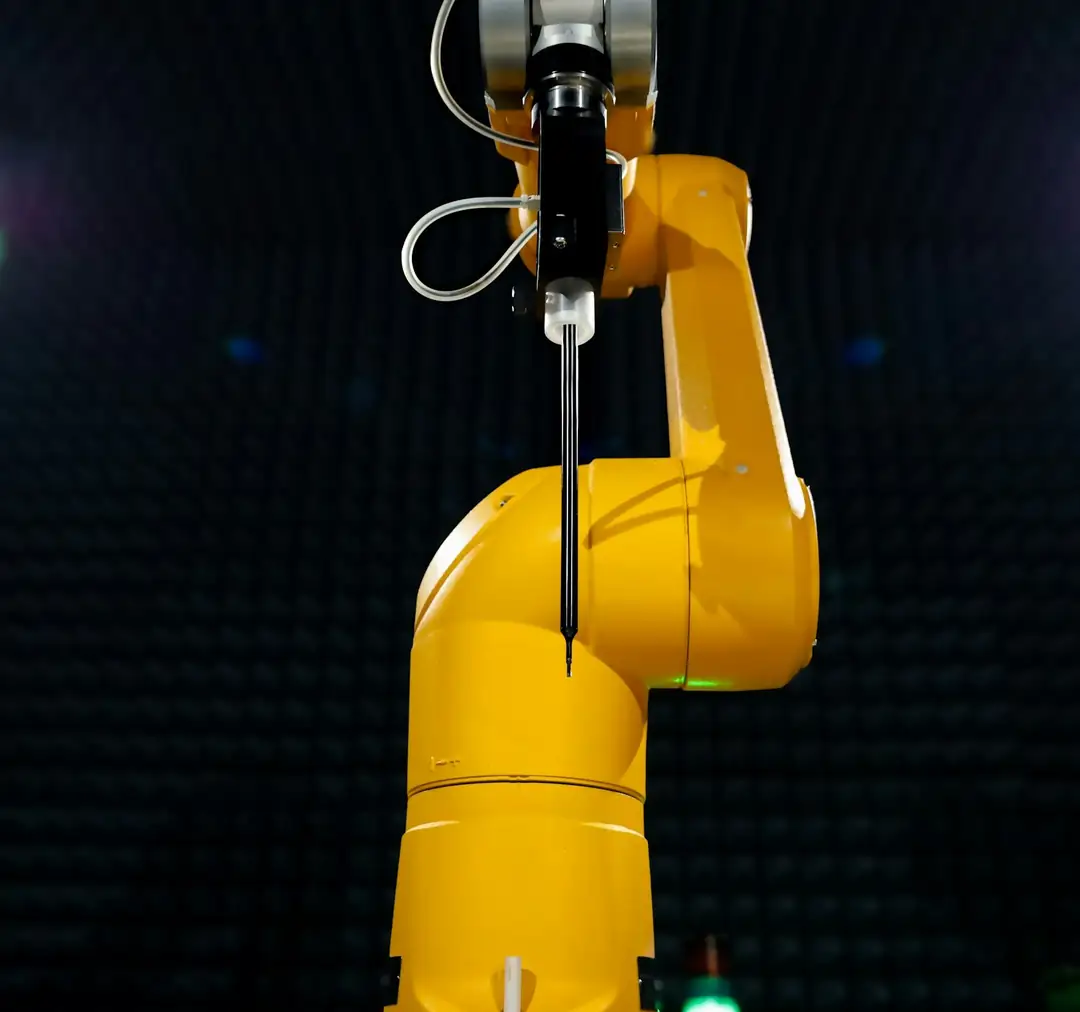
Pittsburgh automation for companies that already think in systems
Your engineers would never accept a process where someone retypes the same data into three places. The office side of the business often does.
A written review of your current site. No obligation.
Operational excellence stops at the front office
Companies in advanced manufacturing, robotics, energy and healthcare typically take process seriously on the production side. Lines are measured, tolerances tracked, clinical workflows standardised. Yet the administrative side frequently runs on email threads, spreadsheets and memory. Quotes wait for someone to price them. Service requests land in a shared inbox. Compliance paperwork is chased by hand.
Automation closes that gap. It means defining the rules once and letting software apply them the same way every time: a quote request that captures the right details and creates a task, an intake form that reaches the correct department, a scheduled report that assembles itself, a reminder that fires before a certification expires.
What it looks like by sector
A manufacturer can move a request for quote from form to estimator with the specifications attached. A technology company can sort inbound enquiries and trial requests by type and route each. A healthcare organisation can handle referrals, forms and reminders with care for privacy. An energy services firm can generate service schedules and customer notices from job records.
Reliability is the whole point
In technical businesses, an automation that works eighty percent of the time is worse than none, since staff stop trusting it. We build with logging and alerts so failures are visible, test against real historical examples and document the logic so your own people can understand and change it.
Where we start
We pick one process that is repetitive, rule-based and slow, preferably with a clear owner. After mapping it step by step we build the connection between the tools involved, run it alongside the manual process until the results match, then switch over. A second and third process follow once the first has proven itself.
Automation depends on tidy inputs, so see web design for forms and portals, and use the [free audit](#audit) to find where data is being retyped.
Retyped or routed
Drag to compare a back office run on copy and paste with one where data moves once.
Quality you can trust
We are committed to excellence.
Learn moreQuote requests that route themselves
Specifications captured once, sent to the estimator and confirmed to the buyer.
- ICapabilities
- IIQuotes
- IIIContact
Proof
Real work, named people
Next step
One clear action
Request a quote-
Requests
GenericDetails emailed, forwarded and retyped by whoever sees them.
CustomOne structured form that creates the record and alerts the owner.
-
Turnaround
GenericResponse time depends on who checks the inbox.
CustomInstant acknowledgement and a task that cannot be forgotten.
-
Accuracy
GenericErrors from re-keying the same values several times.
CustomData entered once and carried everywhere it is needed.
What we deliver
Process automation held to an engineer's standard.
Process mapping
A documented view of how a request or record travels today, with the manual hand-offs marked.
System integration
Your quoting, scheduling, accounting and customer tools connected so data moves once.
Monitoring and alerts
Failures reported to a named person instead of disappearing.
Documentation
Plain-language descriptions of every rule so your team can adapt it later.
Questions buyers ask first
Will this replace our current systems?
Normally not. We connect what you already use, and only recommend replacements when an existing tool cannot be connected sensibly.
How do you deal with sensitive or regulated data?
We select tools and settings appropriate to the sensitivity, minimise what is stored and note anything requiring your compliance review.
What if the automation makes a mistake?
Flows include checks, logs and alerts, and we run them in parallel with the manual process during testing so errors surface before rollout.
Can our own technical staff maintain it?
Yes. That is why we document the logic and avoid anything opaque. Your engineers will find it readable.
Which process should we automate first?
The one that is repetitive, rule-based and slow. A short review of your current workflow usually makes the choice clear.
Pick the process that annoys people most
Name the manual task your team dreads. The free audit estimates where automation would save the most time.